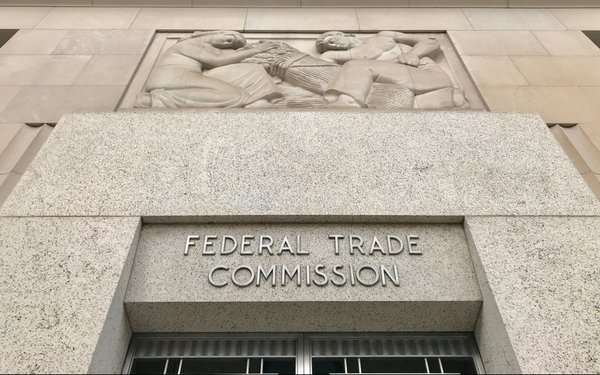
Sixteen attorneys general are calling on the
Federal Trade Commission to regulate "personalized pricing" in the food delivery space.
"Once largely theoretical, personalized pricing has grown in sophistication with rapid
advances in artificial intelligence capabilities and the accumulation of consumer data available to commercial entities," the coalition, led by attorneys general in New York and Tennessee, writes in
comments submitted to the agency Monday.
"Left unchecked, the practice threatens to create even more
obstacles to consumers seeking transparency when shopping online, while simultaneously pushing consumers to spend more than they otherwise might," the attorneys general add.
The law enforcement officials are seeking regulations that would require food delivery services to disclose whether they set prices based on data about individuals, as well as how the
price shown to an individual consumer varies from the price displayed to the general public.
advertisement
advertisement
"The rule should also require that online food delivery platforms utilizing
personalized pricing disclose what specific consumer data they use to set prices," the attorneys general add.
"Likewise, when platforms charge prices that are different from the prices offered
in-store or to the general public on the store’s website, the rule should require that those platforms disclose that fact and what factors result in these price differentials, to the extent
possible," they said.
The filing comes in response to the FTC's call for comments regarding a broad
array of food delivery companies' practices, including the potential use of "personalized" pricing.
Among numerous other questions, the FTC sought input on the "costs and benefits of personalized
pricing to consumers, food and grocery merchants, and online food delivery platforms."
Attorneys general are not the only ones calling for a crackdown on personalized pricing.
The watchdog Consumer Reports is urging the FTC to generally ban customized pricing by food delivery companies.
"The Commission should pass a rule prohibiting the use of
personal data to customize a price, with reasonable and well-scoped exemptions," Consumer Reports writes in comments submitted to
the agency this week.
For instance, the group proposes, the rule should allow companies to offer discounts -- provided the terms are posted online, in "easy to understand"
language.
"This approach permits a wide range of discounting practices, but discourages the type of invasive profiling that the public may find unwanted or offensive, as well
as discounts to niche consumer segments that exclude groups who may have a higher willingness to pay (e.g., a parent discount offered to most parents, but not those who shop online in the middle of
the night, order rush delivery, and don’t live near competitor stores -- all signals that they might have a higher willingness to pay)," the organization adds.
The
watchdog notes it previously reported that Instacart charged varying prices for the same items in the same stores. For instance,
according to that report, a box of 10 Clif Chocolate Chip Energy bars sold for $19.43, $19.99, and $21.99 on Instacart at a Safeway store in Seattle. (Two weeks after the report came out, Instacart
said it was ending "item price tests" on the platform.)
"Based on how much Instacart says the typical household of four spends on groceries, the average price variations
observed could translate into a cost swing for a household of four of about $1,200 per year," Consumer Reports writes in its new filing. "Consumers shopping on Instacart reasonably would have assumed
they were getting the same price as other shoppers."
But the U.S. Chamber of Commerce says the FTC needs
more information before regulating customized pricing.
"'Personalized' pricing is not the same as 'dynamic' pricing, which is itself not the same as a localized promotion; and
a loyalty discount is not the same as a hidden surcharge," the business group writes. "Moreover, a merchant-set online price is not the same as a platform-set individualized price. These distinctions
are important because a disclosure requirement that fails to draw them could chill legitimate discounting and experimentation, generate confusing disclosures, and discourage companies from offering
lower prices and discounts."
The group adds that the record "is not developed enough to support rulemaking here."