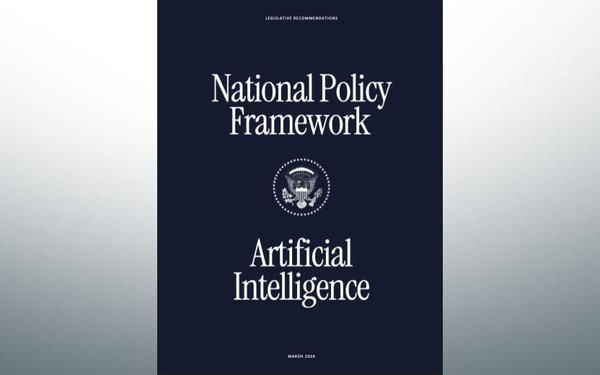
The White House released policy guidelines Friday that call for
blocking state laws that regulate artificial intelligence (AI) and recommend safeguards for children and consumer protections for energy costs.
President Trump has pursued a policy designed to
give U.S. companies mostly free rein in the global race to dominate AI technology, although dozens of states have passed laws in recent months to regulate AI.
Google, Microsoft, Meta, OpenAI
and others have pointed to regulation as a stopgap to the U.S. leading the world in AI. Executives have argued that individual state laws could slow the pace of AI development and introduce new
complexities and burdens to advertisers and legal teams by shifting risk of creative production to the brand and company, among other roadblocks.
advertisement
advertisement
The White House called on Congress to pass
federal AI legislation to override the state laws on Friday.
The suggested measures include Congress streamlining the process to build data centers to power the technology, proposed
guardrails in a framework to prevent the government from using the technology for censorship, and workforce training.
Among the framework proposals is the protection of intellectual property
rights. "The creative works and unique identities of American innovators, creators, and publishers must be respected in the age of AI," according to the framework. "Yet, for AI to improve it must be
able to make fair use of what it learns from the world it inhabits."
The administration proposes an approach to fulfill both objectives and enable AI to thrive while ensuring that creativity
continues to move forward.
The News/Media Alliance expressed appreciation in an email to MediaPost that the White House created a framework that outlines “many complicated policy
questions surrounding AI.”
Danielle Coffey, President and CEO of the News/Media Alliance, said she is in agreement with the framework’s "clear recognition that intellectual
property rights - particularly those of publishers - must be respected.”
Another part of the policy points to defending free speech and First Amendment protections, while preventing AI
systems from being used to silence or censor lawful political expression or dissent.
The framework states that AI cannot become a vehicle for the government to dictate right or wrong thinking,
which could explain why the administration proposed guardrails intended to ensure that AI can pursue truth and accuracy without limitation.
The White House said it would work with Congress to
turn this framework into legislation,” which follows the executive order signed by Trump in December that called on the Justice Department to sue states that pass laws regulating AI.