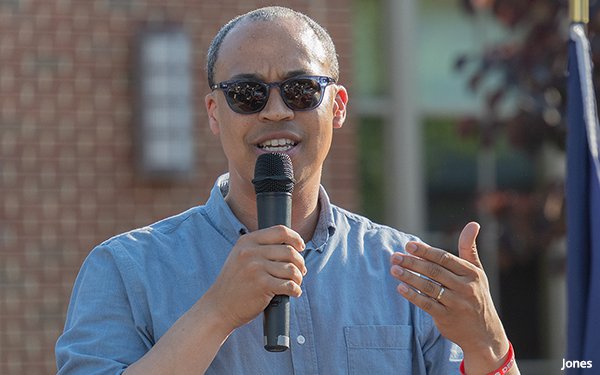
Virginia's attorney general on
Wednesday urged a federal appellate court to reverse a lower court ruling that blocked enforcement of a new law requiring social platforms to verify users' ages, and prohibit minors under 16 from
accessing social media for more than one hour a day without parental consent.
The law (SB 854), which had been
slated to take effect in January, was blocked on First Amendment grounds by
U.S. District Court Judge Patricia Tolliver Giles in Alexandria.
She said in a written ruling that Virginia "does not have the legal authority to block minors’ access to
constitutionally protected speech until their parents give their consent by overriding a government-imposed default limit," and prohibited officials from attempting to enforce the statute against any
NetChoice members.
advertisement
advertisement
The organization, which sued to
block the law, counts large tech companies including Meta Platforms, YouTube, Reddit, and Dreamwidth as members.
State Attorney General Jay Jones is now appealing that ruling,
arguing that the law "struck a balance to enable minors to meaningfully access social media platforms, while protecting them from addiction by returning control to parents."
Jones previously asked the 4th Circuit Court of Appeals to lift the injunction pending appeal. That motion was denied last week for procedural reasons.
His office argues in its
newest papers that the law doesn't "ban" speech, but merely "creates a default setting that enables kids to access any platform for at least an hour per day per platform, and longer if their parents
approve."
The state attorney general is also asking the appellate court to reject the idea that the law is "content-based."
When Giles enjoined
enforcement, she said the law should be considered content-based, noting that the restrictions don't apply to services that "primarily" offer news, sports, entertainment, ecommerce or other content
that isn't generated by users.
The statute "favors provider-selected speech over user generated speech," she wrote, adding that it therefore "should be treated as though it is
content based.
"Virginia chose to regulate user-generated content, but not provider-selected content, because it concluded that user-generated content is more harmful," she
wrote, adding that the law should therefore "be treated as though it is content based."
The characterization as content-based is significant because laws restricting speech
based on content often violate the First Amendment.
Jones' office argues to the 4th Circuit that the content-based designation is wrong because the one-hour time limit applies
to social platforms regardless of subject matter.
"Social media platforms are covered -- and non-social media sites are excluded -- no matter the subject matter, messages, or
viewpoints on their pages," the attorney general argues.
NetChoice is expected to file a response with the 4th Circuit by May 15.