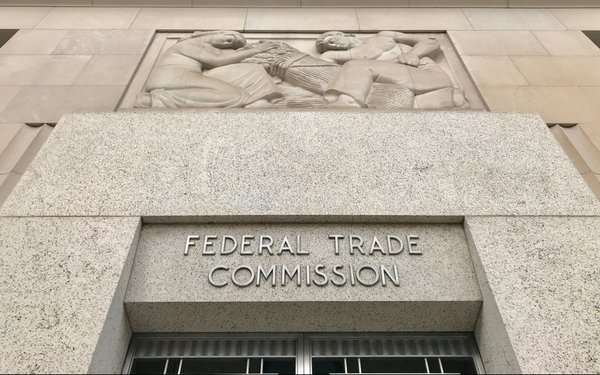
Citing its recent settlements with Dentsu, Publicis and WPP over alleged ad boycotts, the Federal
Trade Commission has dropped its demand for information from news ratings service NewsGuard.
In court papers filed Friday with U.S. District Court Judge Dabney Friedrich in
Washington, D.C., the FTC said the settlements "resolved the issues related to NewsGuard that gave rise to the CID," using an acronym for civil investigative demand.
The
settlement terms are similar to those imposed by the FTC when it approved Omnicom's merger with Interpublic.
Among other conditions, the agency holding companies can't consider media
businesses' "political or ideological viewpoints" when purchasing ad inventory -- except at clients' direction.
advertisement
advertisement
The deals also include terms restricting the holding companies' ability to
direct ad buys based on publishers' "adherence to journalistic standards or ethics established or set by a third party."
The settlements grew out of an FTC investigation
that apparently began last year, soon after Andrew Ferguson took over the agency. As part of that probe, the commission sent civil investigative demands to 17 entities, including NewsGuard, the
watchdog Media Matters for America, and others.
The FTC has said those demands, comparable to subpoenas, were part of an inquiry into whether the online ad industry conspired to deprive
"disfavored" media of ad revenue.
NewsGuard
sued the FTC in
February, seeking to block the FTC from enforcing both the Omnicom merger condition restricting its ability to contract with Newsguard, and the commission's demand for information.
NewsGuard
alleged in its lawsuit that Ferguson was attempting to use the commission's regulatory powers "to attack and punish a private news organization ... to impose their view of speech nirvana."
"The FTC has pursued its campaign because Chairman Ferguson does not like NewsGuard’s news ratings, which he views as biased against conservative publications," NewsGuard
wrote.
"That is wrong -- NewsGuard’s ratings and journalism about news sources are non-partisan and based on fully disclosed journalistic criteria. But the FTC’s
actions are plainly unconstitutional even if that were not the case," the organization added.
The FTC said in Friday's court filing that NewsGuard's bid to enjoin
enforcement of the civil investigative demand is now moot.
NewsGuard plans to continue to challenge the Omnicom merger condition, co-CEO Gordon Crovitz tells MediaPost.
"At the end of the day, this is really about whether brands have the information they need to decide where their ads should run," he says.
Media Matters for
America also challenged the FTC over its demand for information. Media Matters alleged in its suit that the FTC undertook the probe to retaliate for a November 2023 report that ads for Apple, Bravo,
IBM, Oracle and other brands were being placed next to pro-Nazi posts on Elon Musk's X. (Musk also sued Media Matters over the report; that matter is ongoing.)
U.S. District
Court Judge Sparkle Sooknanan in Washington, D.C. sided with Media Matters and blocked the FTC from enforcing the civil investigative demand.
"Speech on matters of public
concern is the heartland of the First Amendment," Sooknanan wrote in an opinion granting Media Matters' request for an injunction. "It should alarm all Americans when the government retaliates against
individuals or organizations for engaging in constitutionally protected public debate."
The FTC appealed Sooknanan's ruling to the D.C. Circuit Court of Appeals, which heard
arguments Monday but hasn't yet issued a ruling.