“Make It Make Sense!” Who hasn’t had that
feeling when going through interactions with America’s healthcare system, especially when dealing with medical terminology and multiple portals/providers?
So let’s look at a
campaign with that that title.
In a:30 spot, a man has just gotten some
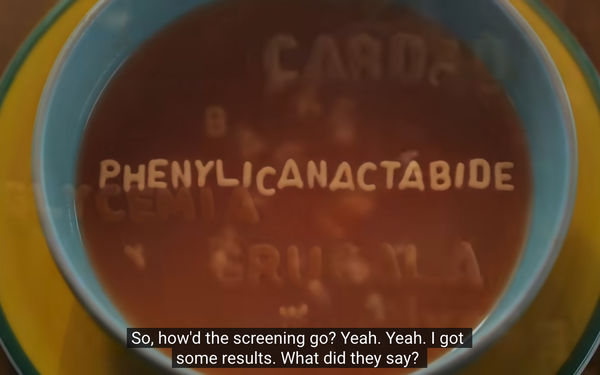
medical screening results on his phone. “What did they say?” asks his friend. The first guy looks down into his alphabet soup where incomprehensible words are appearing:
“phenylicanactabide,” “hyperogula.” So he checks his Verily Me app, which tells him “Your results show your blood glucose was out of range. Making lifestyle changes
can help you get on track.”
advertisement
advertisement
“Verily Me turns confusing results into personalized answers that actually make sense,” adds a voiceover.
That ad, created by
Publicis’ BBH, is part of a launch campaign for Verily Me, which aims to provide “more personal, precise” health care “through telehealth access to healthcare providers, easy
vaccine scheduling, meal and activity planning, and more." It works largely through AI analysis of health records, which the user grants the app permission to access. The AI is named Violet.
The company is an outgrowth of the decade-old Verily Health platform, which started as Google Life Sciences before becoming an Alphabet subsidiary -- until new funding last month made Alphabet into
just a “significant minor shareholder,” as CMO Alix Hart described it to Marketing Daily.
A second TV spot is more specific, but still humorous, focusing in on a man’s need to get a
colonoscopy now that he’s 45 years old. Verily Me, which has been operating in Beta since October, has just released a cancer screening feature from the human side of its business: clinician
recommendations.
“The first two spots center on how clinician recommendations appear in the app, but also how you can use Violet to ask it questions,” explains Hart.
The
services promoted in the two spots are free, but Verily Me makes money through such extra services as a care management program called Lightpath, which employers and insurers can provide as a benefit.
And clinical researchers pay Verily Me for access to users who consent to be in their studies.
The ad campaign, expected to run through most of the year, is using national connected TV, paid
search, paid social, audio connections, demand-side platform marketing, and more. Hart describes the demographic target as widespread, although she does narrow it down to “tech-savvy audiences,
people who actively utilize digital health apps, and those who have a variety of medical conditions.”
The campaign came about, Hart says, because the brand wanted “to find a simple
way to talk about” how it connects people to its features, “trying to make it really straightforward.”
“Healthcare is very complex,” she relates. “We have
found in our research with consumers that navigating multiple doctors, multiple health systems, understanding your lab results, are very difficult at times, particularly if you have multiple
conditions or you’re working with specialists. Connecting that together to understand health can be challenging.
“So how do you create a campaign that showcases the hero, which is
you, being able to have the tools that you need at your fingertips to just make sense of your care, make sense of your health in very simple ways that just put your mind at ease, and help you have
your next conversation with your doctor and move forward?”
The answer, presumably, is “Make It Make Sense!”