After nearly a decade of blowing the
whistle about the so-called “ad tax” – fees paid to data and ad-tech middlemen that cut into working media dollars – the Association of National Advertisers (ANA) introduced
its own version of one that will be charged to advertisers using its new crossmedia measurement platform Aquila.
“It’s called the ‘Fractional Advertising
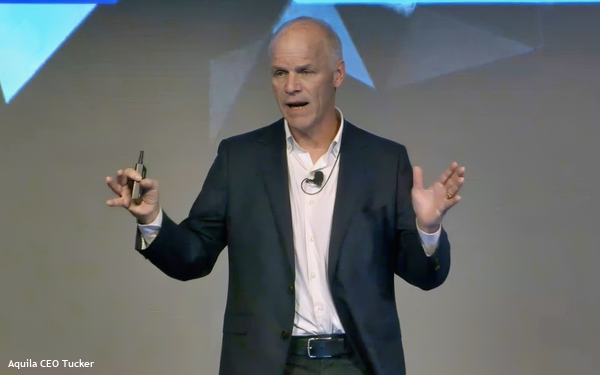
Contribution’,” Aquila CEO Bill Tucker explained during an update on the platform, which operates as a separate for-profit subsidiary of the not-for-profit ANA.
Tucker
said the ANA board approved the new media-buying fee, which goes by the acronym “FAC,” as a way to ensure that Aquila "had an ongoing sustainable funding mechanism."
"We
can’t build this platform and have every year or every other year finding people who need to find money to pay for it," he explained to the ANA financial management attendees, adding: "So the
decision was made to have a durable, ongoing payment system. And the decision was made to have it funded, ultimately, inside the media budget."
advertisement
advertisement
To date, Aquila has been funded
primarily by "tens of millions of dollars" provided by walled-garden platform partners -- Amazon, Google, Meta and more recently iHeartRadio and TikTok -- which have also contributed proprietary data
that helps power the crossmedia analytics that enable Aquila to provide empirical reach-and-frequency estimates for their TV and digital advertising buys.
In its 2024 tax filing, the first to account for Aquila, the ANA reported the
crossmedia measurement platform already represented about 11% of the ANA’s total asset value for that year.
The ANA also reported $14,432,500 in income for Aquila on total ANA
revenue less expenses of -$1,759,885.
While Tucker did not disclose what ANA members are paying in annual or biannual licensing fees to utilizes Aquila he said there was a financial
“benefit” to committing to it this year.
As for the FAC fee payment system, Tucker said it would be processed as part of media buys processed through an end-to-end system
developed with tech partner Mediaocean, and that it would be a low percentage of billings with a cap and that by 2027 the system would operate “frictionless” comparing it to an automated
highway toll payment system.
“The vision is to have it be EZ Pas status by 2027,” he said, adding, “Well be transitioning to this fractional advertising
contribution.”
As for the fee structure, Tucker said the FAC fee will be 0.075% of the cost of media buys, “with a cap of $750,000.
“So if
you’re a billion-dollar advertiser, you pay $750,000. If you’re over a billion dollars, you pay $750,000.”
While it’s unclear how many ANA members may
ultimately subscribe to Aquila, the association currently has about 1,600 members.