Researcher T. Bettina Cornwell, Ph.D., has spent 25 years
studying the way sports sponsorships and celebrity endorsements can pay off for brands -- and why they often don’t. With the World Cup now in fans’ rearview mirror and companies firing up
billions for the 2028 Olympics in Los Angeles, we wanted her take on how well marketers hit their goals, in a tournament that smashed FIFA’s revenue goals and broke viewing records.
Cornwell holds the Philip H. Knight Chair and heads the marketing department at the University of Oregon's Lundquist College of Business. Busy this week at the Olympic Academy in Greece, she
emailed her final grades to Marketing Daily.
This interview has been edited for length and clarity.
Marketing Daily: Your work has focused on the need for
sponsors to shift away from measuring ad equivalency, which tries to translate visibility into a dollar value, and instead focus on authenticity and engagement. Did any brand jump out at you for
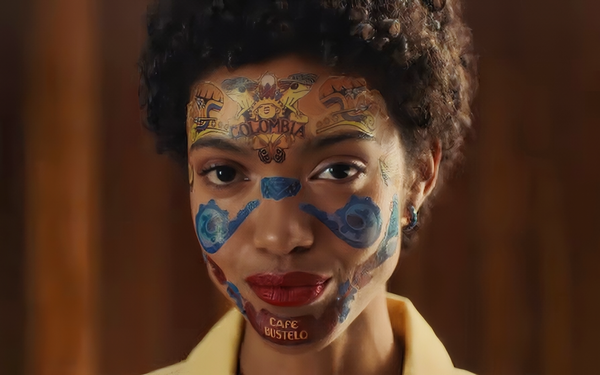
pulling off real engagement, versus just buying eyeballs? My colleagues loved the Cafe Bustelo face tattoo kit, which YouGov ranked as No. 1 overall in engagement.
advertisement
advertisement
T. Bettina Cornwell:
Necessity is the mother of invention. When brands are not sponsors and cannot mention aspects of an event such as “FIFA World Cup,” when they do not have an athlete spokesperson, they
become creative.
Café Bustelo was a clear winner. The face tattoo kit encouraged fans to connect with a favorite team and
then “to tag your new look with @cafebustelo" for organic amplification. It was well done and added to the World Cup experience, without taking any limelight from sponsors.
Another
non-sponsor engaging with the World Cup was Ikea Canada’s “Assemble the World," which used its products --
towels, dishes and furniture -- to develop vignettes of 18 national team flags. It spoke to the diversity of Canadians and was in keeping with Ikea’s previous "commentary without comment" style.
It took a moment to have that “aha” moment and recognize the flag, but if it was a flag of personal relevance, it was instantaneous and likely gave viewers a feeling of part of the
Canadian family.
In earned media, Nike wins with “Rip the Script” by using athletes in a long-play ad but not
mentioning the World Cup. You know it is good when it surpasses its own legendary ability to generate shares -- remember their “Write the Future” and “Find your Greatness”
campaigns? -- with already more than 1.5 billion views across platforms.
Marketing Daily: Stars like David Beckham, Lionel Messi and Christian Pulisic were everywhere this tournament,
often for competing brands. Will people remember that Beckham, for example, was in ads for Home Depot and Stella Artois, while Messi is in ads for Lowe’s and Michelob Ultra?

Cornwell: It depends
on the brand's goal. People form mental associations that support awareness but can also function without explicit memory. A consumer may have a positive attitude toward a brand following exposure but
may not be able to articulate just why. If a brand just seeks this, then it may have been accomplished.
If the brand was seeking memory of the relationship between their brand and the
athlete, perhaps as a base for other strategies, there may have been some confusion about the partnerships.
Marketing Daily: These are huge investments, with top-tier sponsors spending
$150-$200 million to play in the World Cup, and most spending up to $400 million over the four-year cycle. Your research has found that sponsorships pay off in the long-term, over many years, rather
than short-term exposure. But many U.S. viewers, me included, watched the World Cup for the first time this year, with no sponsorship history to build on. Does the long game argument still apply? Or
do brands just default to visibility?
Cornwell: Being a first-time World Cup viewer means you bring less brand exposure baggage. The possibility of developing a new association just
through exposure is there.
That said, the long game in sponsoring takes the entire ecosystem into account. Individuals who watch sports regularly are seeing sponsors across the
ecosystem, and even if it's the first time at the World Cup, viewers are still seeing many of the World Cup sponsor brands in other contexts. If brand managers want to set up for long-term success in
sponsoring, they need to develop a long-game view of audience understanding of their brand.
Marketing Daily: Is there any way to tell yet whether a sponsorship actually "worked"
long-term, or do we only find out years from now? And how is it changing, as these ecosystems sprawl out on social media, which means brands are not only competing for consumer awareness against other
brands, but even against past sponsors?
Cornwell: Estimating long-term impact is indeed a long-term project. But there are some indicators and managerial actions that bode well.
Communications with “discoveries” and “aha” moments support memory, being consistent and true to brand image (rather than deviating to event particulars) supports long-term
understanding of the brand. Managers can make their coverage related to the partnership widely available and even cataloged for review and commentary.
Marketing Daily: LA28
is next. What's the one thing from this World Cup you hope brands don't repeat?
Cornwell: One can only hope that we see less advertising from gambling and prediction platforms for LA28.
Gambling is really not in keeping with the Olympic and Paralympic values of excellence, respect and friendship.