ANA Finds Influencer Marketing Agencies Averaging 30% Commissions


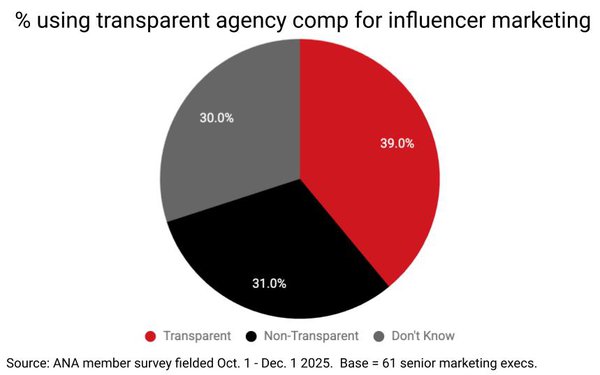
Nearly two-thirds (61%) of senior marketing executives currently are using compensation models that are either explicitly non-transparent or unknown to pay agencies for managing their influencer marketing campaigns, according to a survey conducted by the Association of National Advertisers late last year.

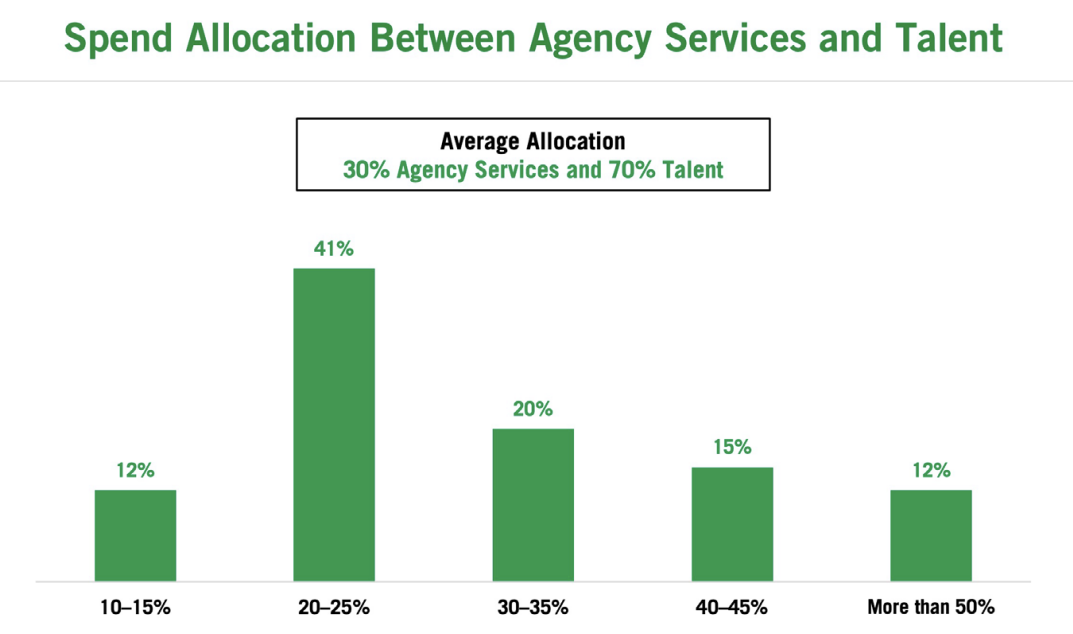
The survey, which is the basis for the ANA's first-ever "Influencer Marketing Agency Compensation" report, also reveals that, on average, 30% of influencer marketing spending is being paid to agencies vs. 70% to influencers themselves.
That said, nearly three-quarters (73%) of marketers participating in the study said they are satisfied with their current influencer marketing agency compensation agreements.

advertisement

advertisement

4 comments about "ANA Finds Influencer Marketing Agencies Averaging 30% Commissions".
Check to receive email when comments are posted.
  1. Dan C. from MS Entertainment, February 20, 2026 at 9:01 a.m.

    What exactly is the purpose of this study? What is the transparency they're Presenting?
     
    Why does an agency need to disclose its operating agreement with influencers?  Brand agencies do not need to disclose how much they charge their brand clients for campaigns, so why does an influencer agency need to be held to a different standard? 

    Managing influencers is not a one size fits all engagement and not all influencers are equal on many levels. 

  2. Joe Mandese from MediaPost Inc., February 20, 2026 at 9:20 a.m.

    @Dan C. from MS Entertainment: Re. purpose, you can read the report by clicking on the link, but here's what it says: "to identify areas
    of waste in influencer marketing and then remedies to reduce that waste and optimize
    spending. That working group has covered areas including selecting influencers, vetting
    influencers, models for influencer management, governance/compliance, and measurement. Influencer marketing agency compensation emerged as a significant and ongoing
    challenge for marketers and an opportunity for additional learning, given widespread
    concerns around transparency, consistency, and alignment to performance."

    Re. your second question, I believe many marketers have been striving to understand the net agencies take on their gross spending for a variety of reasons, including negotiating better terms, in-housing, etc., but mainly just to understand the relative ROI of their "working" vs. "non-working" media budgets.

    Re. your point about non-disclosure, based on my coverage of the business, I don't think that's necessarily true, especially between big advertisers (the kind that are ANA members) and agencies, but if you read the report you'll see there's not 100% unanimity even about that.

  3. Dan C. from MS Entertainment replied, February 20, 2026 at 10:39 a.m.

    @Joe, I read through the report and I believe the ANA is trying to do too much here.  While it recognizes that influencer marketing varies wildly in the approach and offerings, the only thing I really agree with is that brands, agencies, whoever, is engaging the influencer's agency/rep should agree on KPIs and then decide if the total investment is worth it.  For more than a decade, we always established KPIs and "what does success look like" when negotiating campaigns on behalf of brands that engaged the influencers that we represented. 


    When it comes to media and certain metrics, it's going to vary wildly by platform and the vast majority of influencers don't know how to collect and present that data - so it's added work for me to access that data and then present it in a format that most agencies and brands can work with.


    There is no "standard" contract for traditional talent and music representation because the terms are almost always dictated by the stature of the talent and the specific services the agent provides. Set benchmarks and KPIs during the negotiation and agree on deliverables. Anything beyond that really isn't anyone's business as to how the talent is compensated.  


  4. Lee Odden from TopRank Marketing, February 23, 2026 at 1:27 p.m.

    The ANA's focus on fee transparency is important, but it only tells part of the story - at least with B2B influencer marketing. 


    Our 2025 B2B Influencer Marketing research shows why agencies are often central to both program execution and performance. For example, 48% of marketers say identifying, qualifying, and connecting with ideal influencers is their #1 challenge, and 45% of marketers using an agency to do their influencer research and management are those with the most advanced, always-on, or enterprise programs

    Additionally, brands with the most effective programs are over 3x more likely to heavily involve influencers in co-creation of content with the brand, not simply paying an influencer to create and promote content on their own channels. Agencies like ares are relied on to architect the types of influencers and activations that map to content types narratives, channels and intended outcomes.


    Agency fees in B2B influencer programs represent strategy, influencer identification and vetting, contract management, content co-creation, relatinship management, measurement, paid amplification, performance optimization and payment management. 30% is more than fair. 

Next story loading loading..