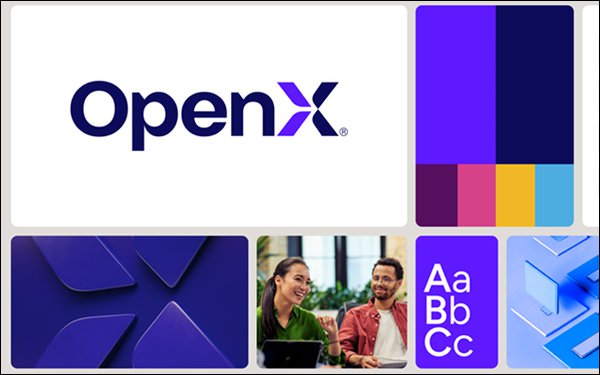
OpenX executives have repositioned the company as "The
Intelligent SSP." The name will not change, although the company is introducing a new visual identity that includes a logo and product architecture to simplify digital advertising.
“We’ve spent the past decade building the intelligence layer closest to media and data,” stated Matt Sattel CEO of The Intelligent SSP. “This next step is about putting that
power to work in a way that’s easier to understand and simpler to use.”
The company's proprietary identity graph supports the shift as it prepares advertisers to recognize the
company as being more than just a pathway through which ads travel, which suggests the future of OpenX.
The "Intelligent" label is a direct response to the "death of the cookie" and the
ability for AI to process data and behavior.
advertisement
advertisement
For advertisers, repositioning the brand shifts OpenX from being an intermediary to a strategic data partner. The company hopes it will reduce
complexity in an AI-driven advertising market and allow marketers to regain control of their own media budgets.
By reducing complexity, more of an advertiser's budget goes toward actual
media rather than getting lost in a complex list of fees and intermediaries. Major advertisers like Ford are looking to move beyond paying fees to 20 tech companies when running
campaigns.
Although OpenX does not want to remove the intermediary because it is one, executives are trying to disintermediate the competition to become the single and most direct bridge or
intermediary between buyers and sellers.
OpenX began as an open-source ad server project in 1998, and commercialized as an open-source ad server in 2008. Tim Cadogan and Jason
Fairchild founded the company in a Pasadena, California in a living room.
In April 2009, OpenX launched its online advertising marketplace and became the advertising industry's first real-time
programmatic ad exchange. Some suggest Scott Switzer, who was involved with the ad server that evolved into OpenX, was also a co-founder.
The repositioned company strategy introduced a product
suite that retains the name: OpenXSelect, OpenXBuild, OpenXControl, and OpenXExchange. The goal is to make it easier for advertisers, publishers, data partners and demand-side platforms (DSPs) to
understand.
The architecture rests on three pillars: quality, performance and adaptability, and includes direct publisher relationships, AI-powered curation and targeting that occur closest to
inventory, and an infrastructure for advertisers to build next-generation ad solutions on a secure and interoperable foundation.
OpenX executives believe the industry must anchor innovation in
quality standards, transparent supply paths, and privacy-forward data practices. In the announcement, Sattel said simplification is not just about efficiency, but taking responsibility for
campaigns.