Ulta, a perennial sparkler in the often-flat
retail world, reports earnings next week. With a 36.4% market share and 46 million loyalty members, trends in its quarterly financials tend to say as much about the national spending mood as they do
about the latest lip gloss.
The backdrop looks reasonably healthy. Circana finds the beauty sector growing steadily, with prestige sales rising 6% to $8.1
billion in the first quarter, and mass retail climbing 7% to $18.1 billion. Notably, it's the first time in five years both segments have grown at nearly the same rate. And in both cases, growth was
largely value-driven, reflecting a mix of premiumization and careful spending.
Fragrance was among the strongest performers, with double-digit gains in
women's fragrances at mass and continued momentum in prestige minis — a format that captures both the trade-up and trial-driven shopper. Skincare remained a steady engine, with clinical brands
capturing over a third of prestige dollar sales. Makeup was the softest spot.
advertisement
advertisement
"Fragrance, facial skincare, hair treatments, and personal care products
continue to benefit from consumers prioritizing self-care and wellness-driven routines," says Larissa Jensen, Circana's global beauty advisor, in the report. "Shoppers are seeking affordable yet
high-performing products that feel good and work well."
A new NielsenIQ study adds texture to what's driving those choices. Trust and "me-time" appeal rank as
the top purchase driver, with shoppers increasingly grading retailers on how rewarding, inspiring, and frictionless the overall experience feels — not just what's on the shelf.
"Trust isn't built through product breadth alone," says Jacqueline Flam, NielsenIQ's managing director for beauty and health, in the analysis. "Retailers must focus
on the entire shopping journey, tapping into the desire of prestige beauty shoppers to feel seen, valued, and inspired."
Ulta appears to be threading that
needle. Placer.ai reports visits were up 10.3% year-over-year in February, down slightly in March, and up again 3.6% in April, positive in nine of the past 12 months. Longer in-store linger times
suggest its experiential investments are working.
Newness matters too. February's outsized jump coincided with Ulta's taking on Rare Beauty, Selena Gomez's
clean-beauty line, for the retailer's biggest monthly traffic gain in a year.
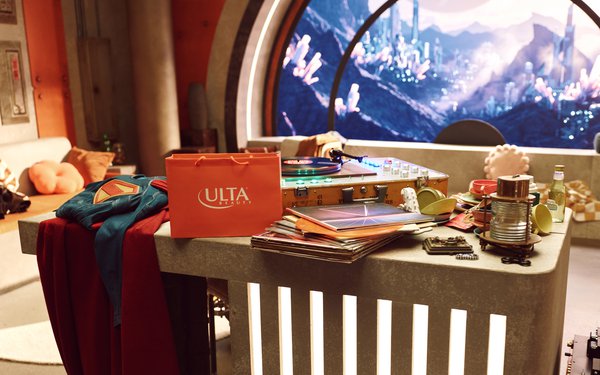
Ulta is doubling down on that discovery strategy this summer with a splashy partnership with DC Studios'
"Supergirl," opening June 26. The campaign, which features actress Milly Alcock across cinema, streaming, social and in-store displays, organizes products around three signature beauty looks and
includes immersive window installations at flagship locations in New York, Los Angeles, Chicago and Dallas. It's exactly the kind of cultural moment-making that analysts say separates Ulta from the
competition.
Deutsche Bank analyst Krisztina Katai thinks many on Wall Street are underestimating Ulta. Despite negative investor sentiment and shares trading
around $520, she gives Ulta a Buy rating and a $685 price target. "Ulta’s investments in the consumer shopping and brand discovery experience, newness pipeline, and speed-to-market give
management multiple levers to play offense," she writes, singling out TikTok Shop — already 10% of total beauty ecommerce — as a key growth catalyst.