Over the past six years in Canada, self-harm incidents by
youth increased 975%, according to SEMRush Data, with more than 1.3 million online searches relating to self-harm made just last year.
Yet, Kids Help Phone, a longstanding source of mental
health consultation and support in Canada, wasn’t seeing a corresponding increase in self-harm traffic to its own platform.
Determining the cause to be “shame, guilt and
fear” making it hard for young people to converse about the topic, the nonprofit has teamed up with Omnicom’s McCann Canada to provide kids with the words they need to ask for help.
Using Silverpush ad-serving technology that the agency says reverse-engineers media safety algorithms, young people engaging with self-harm-themed content get redirected to a platform called
Feelings to Text. based on “specific self-harm-related keywords like cutting and burning,” Jaclyn Berzins, senior director of the campaign’s media buying agency Epitaph Group,
tells Marketing Daily. “It was important that we not introduce the subject of self-harm to young people who were not already actively engaging with that specific content (i.e., videos of
individuals sharing their experiences with self-harm).”
advertisement
advertisement
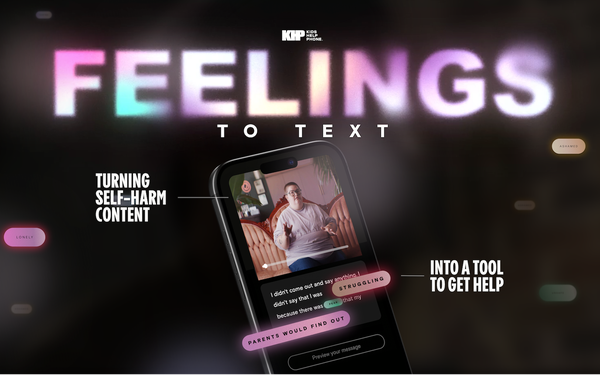
Feelings to Text, as described and show in this demo, allows users to
“choose a film they relate to based on the descriptions and watch a real person share their experience with self-harm as well as how they found hope and healing.” During the videos,
“interactive subtitles let youth select all the feelings and experiences they relate to.” Then, “their selections are used to create a text message to Kids Health Phone, which can be
seamlessly opened, edited, and sent through the built-in messaging app on their phone, so they can connect with a crisis responder and start a conversation.”
"Feelings to Text works
because it reaches young people exactly where they are: in the very spaces they're least likely to find support,” Rebecca Stutley, Kids Help Phone’s executive vice president of brand,
storytelling and communications, said in a statement. “This was driven by the insight that in many cases, young people are thinking about and engaging in self-harm on their own rather than
talking about it. Kids Help Phone wants to reach young people in their worlds and connect them with stories of hope and help to put their feelings into words, including the ones they are most likely
to hide."